What's Missing From Your Kitchen Cabinet Quote?
Before a cabinet quote becomes a contract, account for every visible finish and every installation task that can hide outside the box price.

What matters most
- A cabinet box line does not always include finished ends and trim.
- Ask who pays for delivery, storage, assembly and installation.
- Mark omissions on a drawing and turn them into written options.
The finished kitchen includes more than cabinets
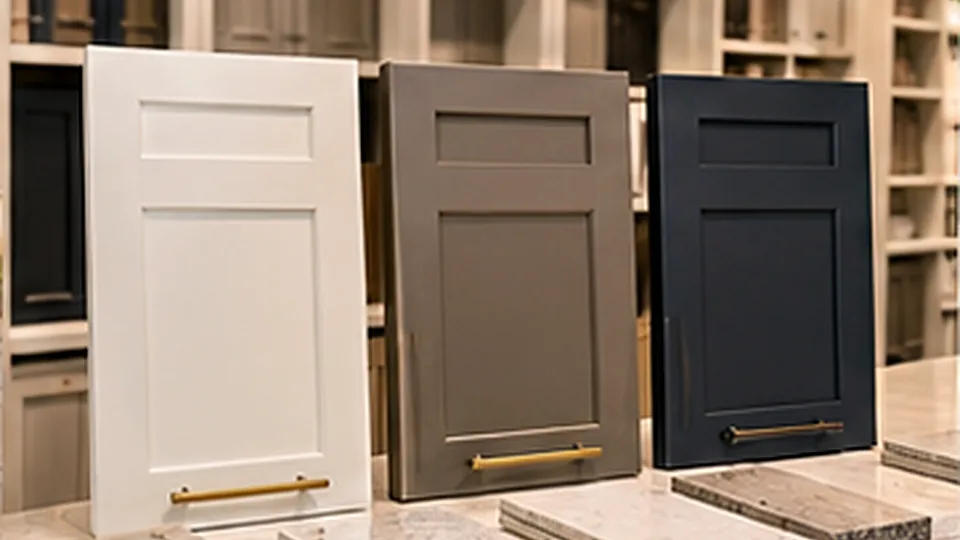
A supplier can correctly price every base and upper cabinet and still leave a visibly unfinished kitchen. Finished side panels, fillers, face-frame scribes, crown molding, toe kicks, decorative panels, under-cabinet trim and hardware are not interchangeable. Ask for a line-by-line list and a labeled elevation.
Treat the cabinet manufacturer's price, the dealer's services and the installer's services as separate responsibilities. A complete package may bundle all three. The quote still needs to say what the finished result includes.
- Cabinet boxes and door/drawer fronts.
- Finished exposed ends and appliance panels.
- Fillers, toe kicks, moldings and handles.
Inspect the elevation like a punch list
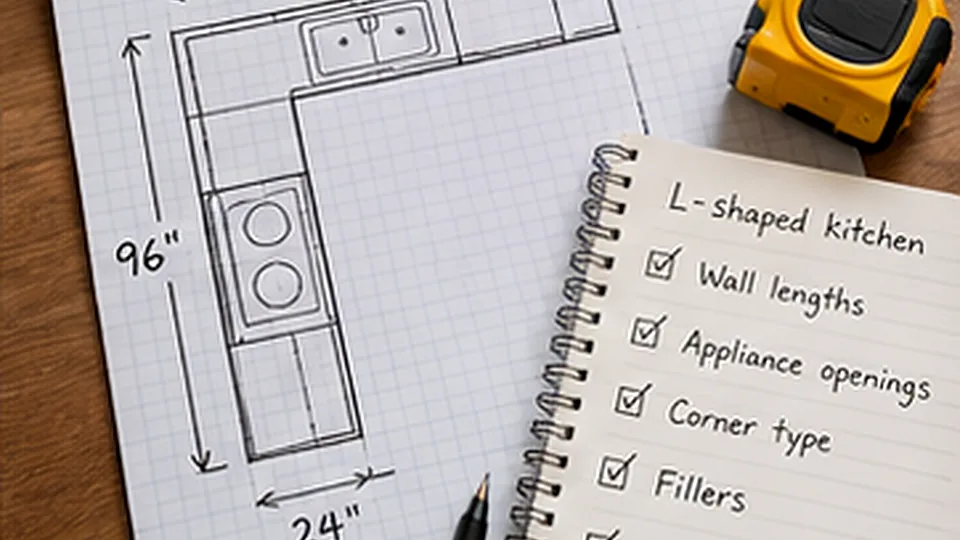
Walk clockwise around the plan. At each exposed end, ask whether it is factory-finished, field-finished or covered by a matching applied panel. Where a cabinet meets an imperfect wall, show the filler or scribe strip and its finish. Below every run, show the toe-kick material and corner returns.
At the top, note crown, stacked cabinet transitions, light rail and soffit gaps. On a tall refrigerator panel, verify height and depth alignment with the exact appliance. Doors need enough clearance to open without striking adjacent handles or trim.
| Item | Likely ambiguity | Ask the supplier |
|---|---|---|
| Finished ends | Exposed side shipped unfinished | Which elevations receive matching panels? |
| Fillers and scribes | Width shown as residual gap | Who supplies and cuts each piece? |
| Toe kicks and crown | Only boxes are priced | How many linear feet of each finish? |
| Hardware | No handles or drilling | Are model, quantity, and fitting included? |
| Delivery and storage | Curbside versus room-of-use | Who receives, inspects and protects cartons? |
| Assembly and fitting | Flat-pack versus installed | What prep, leveling, fastening and touch-ups? |

Check jobsite services that can double the bill
Confirm whether the installation rate includes protection of finished floors, removal of existing cabinets, disposal, wall repairs, shimming and leveling, countertop coordination, appliance panel fitting, caulking and final cleanup. Some items properly belong to a general contractor, but they must appear somewhere.
Ask who handles shortages, shipping damage and replacements. A delayed drawer front can postpone countertop templating or final payment. Require a written change process for field modifications.
- Measure and verify walls before production.
- Separate demolition and new installation scope.
- Identify punch-list responsibility and warranty contact.
Cabinet quote omissions checklist
Get a print-ready planning worksheet by email. We use your name and email to fulfill your request, not to sign you up for marketing.
Compare supply-only and installed quotes fairly
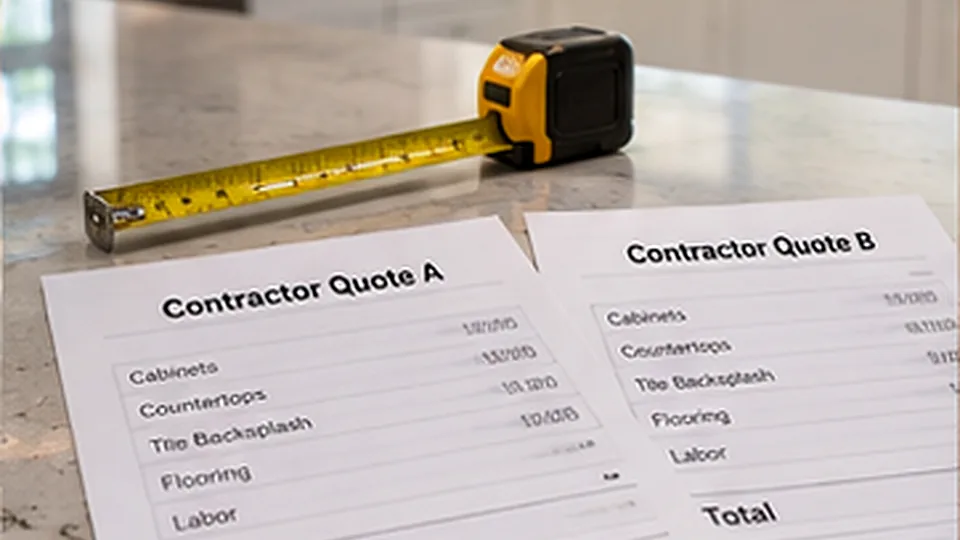
A retail cabinet total is not the same as an installed cabinet package. Conversely, adding a generic labor estimate on top of a contractor's already installed price double-counts labor. Normalize units, quantities, shipping, taxes and service boundaries before comparing.
Ask whether the cabinet line requires special support, installation hardware or finish touch-up kits. Document the approved cabinet schedule so substitutions cannot be made silently when stock changes.
- Product price versus installed price distinguished.
- Delivery and taxes explicit.
- Installation quality and exclusions in writing.
Turn an ambiguous line into a clear decision
Write 'included', 'optional with price', or 'excluded' beside each component on the elevation. Photograph the existing walls and fixed items so the installer can identify constraints. Review all additions with a single owner before approving production.
Use the stock, semi-custom and custom comparison guide for the product selection. Use the quote-comparison guide to compare a complete cabinet package with whole-kitchen contractor bids; they are different scopes.
- Redlined elevation signed or acknowledged.
- Any allowance shown with unit and amount.
- One party responsible for the finished cabinet line.
Sources and scope notes
We distinguish published references from worked scenarios, which are not verified contractor bids. Review product instructions and local requirements for your own project.
- FTC: Avoid Home Improvement ScamsWritten estimates and contractor selection
- Cambria: Countertop Installation RequirementsCabinet readiness before countertop templating