Which Appliances Should You Replace During a Kitchen Remodel?
Keep or replace each appliance based on condition, dimensions, utility compatibility and the cost of delivery, installation and haul-away, not just matching finishes.
What matters most
- Make the keep/replace decision appliance by appliance.
- Exact model dimensions and connections shape cabinetry.
- Include delivery, install, disposal and cabinet adjustments.
A remodel does not require an all-new appliance package
Start with the refrigerator, range or cooktop, oven, dishwasher, microwave and ventilation equipment. Record each model number, age if known, condition, operating issues, size and whether its current utility connections will work after the remodel. Some appliances may remain perfectly serviceable while others cannot fit the new cabinetry or design.
Replace items because of performance, reliability, fit, safety or confirmed operating-cost reasons. Cosmetic consistency is a preference that can be priced as an option, not an engineering requirement. Do not assume a new appliance saves money without comparing the purchase and installation cost with credible energy-use data.
- Keep, replace now, replace later or investigate for each item.
- Record exact model and serial where relevant.
- Check warranty, recall and service availability.
Measure the opening before selecting the model
An appliance body width is not the full required installation opening. Manufacturer manuals can specify additional clearances, anti-tip requirements, ventilation, door swings, hose routing and electrical or gas needs. Cabinet plans must reflect those instructions.
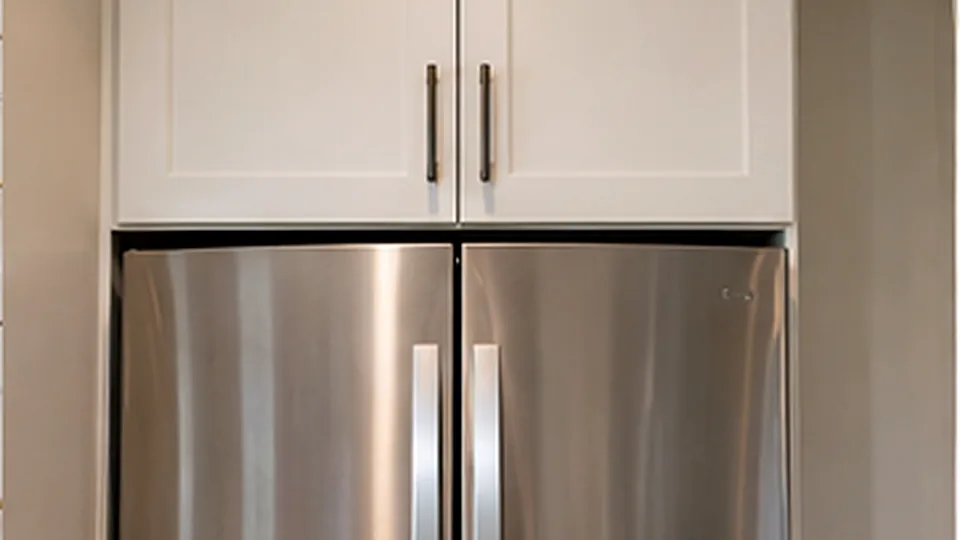
Refrigerators deserve an overhead-height check and usable door opening; dishwashers need a finished cabinet opening plus water, waste and electrical access; ranges and built-in ovens need the manufacturer's exact cutout specifications.
| Appliance | Check before keeping | Extra scope if replacing |
|---|---|---|
| Refrigerator | Temperature, service, dimensions, water line | Height/door fit, delivery, haul-away |
| Dishwasher | Leaks, cycles, accessible connections | Opening, hose and electrical coordination |
| Range / cooktop | Fuel, ventilation, safe condition | Cutout, power/gas, ventilation, anti-tip |
| Oven / microwave | Built-in dimensions, function | Cabinet housing and circuit compatibility |
| Hood / ventilation | Duct route, airflow, noise | Ducting, makeup air and code review |

Installation costs can overturn a tempting sale price
Delivery may end at the curb or involve moving the appliance to its final room. Installation may be offered separately and can exclude new circuits, gas lines, water shutoff replacement, vent ducting, trim kits or disposal of old units. Review vendor terms and who will connect each service.
Ask whether cabinet modifications or countertop cutouts become necessary for the selected model. Even a nominally matching appliance can change work if the door swing or required opening is different.
- Delivery route and stairs measured.
- Electrical, gas and plumbing provision confirmed.
- Haul-away and disposal responsibility in writing.
Kitchen appliance keep-or-replace decision worksheet
Get a print-ready planning worksheet by email. We use your name and email to fulfill your request, not to sign you up for marketing.
Preserve choices until the cabinet drawing is ready
If you want to keep an existing refrigerator, give the cabinet supplier the exact model and clearance sheet now, not after the overhead cabinet is built. If you plan to replace it in two years, consider how a future model might fit without promising universal compatibility.
For any built-in appliance, final models should be selected before countertops are cut or cabinets are ordered. Changes later can trigger restocking, re-fabrication and installation delays.
- Provide model numbers with design brief.
- Approve compatibility of every opening.
- Document who bears change costs.
Use energy information carefully
An ENERGY STAR label or EnergyGuide information can be useful when comparing efficiency among specific models, but it should not become an unsupported savings claim. Consider measured annual usage assumptions, local utility rates, appliance life and repair costs alongside the total installed price.
If the appliance has a safety problem or a current recall, prioritize appropriate professional assessment or manufacturer guidance. A remodel should not be used to conceal unsafe equipment.
- Compare model-specific energy information.
- Separate one-time purchase from operating costs.
- Verify recalled or faulty equipment before reuse.
The final appliance decision is a scope change log
Create a line for each appliance with status, model, dimensions, hookup, quote, delivery date, install party and haul-away. This avoids treating a package advertisement as a complete renovation scope. Use the refrigerator-cabinet fit guide before signing the cabinet schedule.
Track appliances you keep separately in the kitchen budget. Use the contractor quote guide to make sure anyone doing connection work is named and priced.
- List models and opening requirements.
- Name installation and disposal parties.
- Include timeline and change-order impact.
Sources and scope notes
We distinguish published references from worked scenarios, which are not verified contractor bids. Review product instructions and local requirements for your own project.
- Whirlpool: Refrigerator Size and MeasurementMeasured appliance fit considerations
- Whirlpool: Delivery and InstallationDelivery and installation scope distinctions
- ENERGY STAR: Appliance ProductsModel-specific efficiency comparison